The Pacific region has entered one of the tensest periods it has seen in years. The increasingly outspoken anti-China rhetoric coming from Japan’s Prime Minister, Beijing’s sharp and uncompromising responses, and the surge in military activity around Taiwan are reshaping the region’s fragile geopolitical balance. Viewed from a position that prioritizes peace over confrontation, the magnitude of the risk becomes even clearer.
Japan’s New Posture: Taiwan as “Our Issue Too”
In recent weeks, Japan’s Prime Minister has made a series of statements that many observers see as a departure from the country’s post-World War II pacifist doctrine. His assertion that “instability in the Taiwan Strait poses a direct threat to Japan’s national existence” is particularly striking.
This framing has further strained regional dynamics at a time when Tokyo is rapidly expanding its defense budget and deepening its military coordination with the United States. From Beijing’s perspective, these moves represent “a return of militaristic tendencies” in Japan—an accusation that carries deep historical resonance in East Asia.
China’s Sharp Response: “Taiwan Is Our Internal Matter”
Chinese officials responded swiftly and decisively to Tokyo’s statements. A spokesperson for the Ministry of Foreign Affairs reiterated last week that “Taiwan is an inseparable part of China, and external interference is unacceptable,” adding an implicit rebuke that Japan was “forgetting its historical responsibilities.”
Parallel to these remarks, China intensified its military exercises around Taiwan—an unmistakable message that Beijing’s position is firm not only in words but also in action.
A High-Level Call Amid Rising Pressure
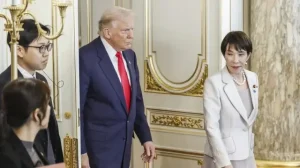
Amid this wave of tension, Japan’s Prime Minister Sanae Takaichi and U.S. President Donald Trump held a 25-minute phone call focused on growing Indo-Pacific pressures, including the renewed friction between Beijing and Tokyo over Taiwan.
Both leaders emphasized that coordination between Washington and Tokyo must be maintained at a time when regional security concerns are accelerating.
Taiwan at the Center of a Three-Way Geopolitical Contest
Taiwan today stands at the heart of the Pacific’s geopolitical turbulence. The three major actors in the region approach the issue from starkly different vantage points:
- China sees Taiwan as a territory that must “inevitably be reunified”—peacefully if possible, but by force if necessary.
- The United States, while officially committed to the “One China” policy, continues to arm Taiwan and provide de facto political backing.
- Japan openly argues that any conflict in Taiwan would represent a threat to its own national security and is positioning itself accordingly.
This triangular configuration creates a volatile environment in which even a minor miscalculation could ignite a much larger crisis.
The Escalating Arms Race Brings No Security
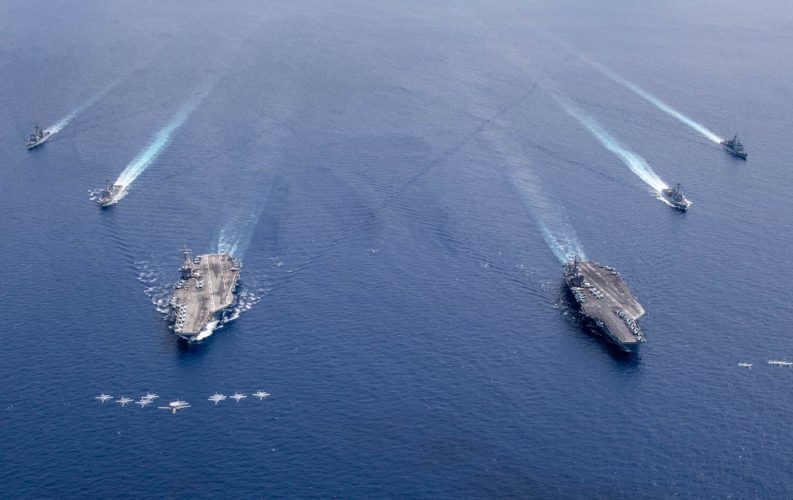
Military drills, fighter jet flyovers, naval patrols—these activities have become routine in the Pacific. Every party claims these actions are merely “defensive.” In reality, they create a landscape of deepening mistrust and strategic anxiety.
History has taught us repeatedly that accumulating more weapons does not build security; it amplifies fear, misinterpretation, and the risk of war.
What the Region Truly Needs: Diplomacy, Restraint, and a Focus on People
The everyday realities of Pacific populations offer a stark contrast to the region’s military posturing. From rising living costs to intense economic pressures and the worsening climate crisis, people across the region face urgent challenges. Meanwhile, expanding defense budgets drain public resources away from social welfare, environmental protection, and economic resilience.
A peaceful resolution to the Taiwan issue is therefore not only a moral imperative but also the most rational path for the well-being of millions.
Maintaining open diplomatic channels, strengthening direct communication between Beijing and Tokyo, improving U.S.–China military dialogue, and pulling Taiwan’s future out of the shadow of war scenarios are all essential steps toward regional stability.
Final Word: The Pacific’s Future Should Be Shaped by Diplomacy, Not War
The stakes in the Pacific are extraordinarily high. The statements coming out of Tokyo, Beijing’s stern warnings, and Washington’s strategic maneuvers reflect more than shifting power dynamics—they shape the future of entire societies.
And that future must not be written through confrontation. It must be built through reason, dialogue, and the shared interest of regional peoples in preserving peace.