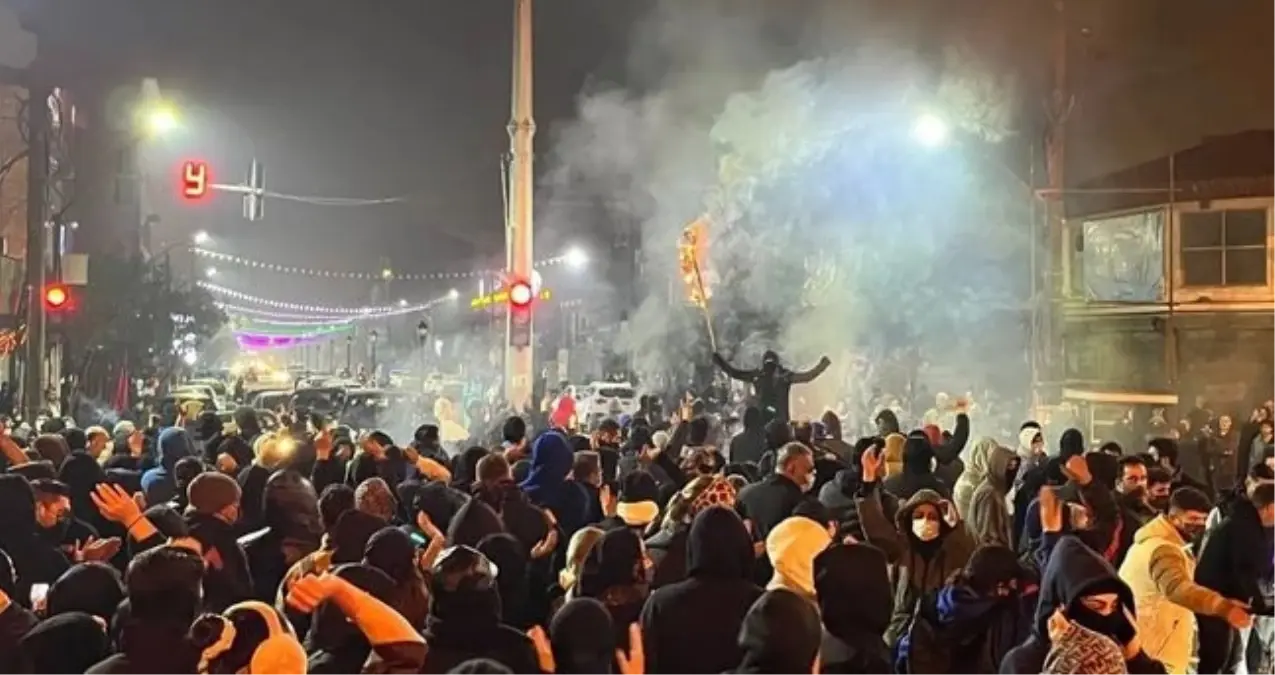
The recent mass protests in Iran may appear on the surface to be driven by economic causes, yet in reality they represent a new manifestation of more than four decades of accumulated history, suppressed demands, and structural inequalities. To understand today’s Iran, it is necessary to recall the promises with which the 1979 Revolution emerged and the type of regime into which it ultimately evolved.
The 1979 Revolution: A Popular Uprising and Islamist Power
The 1979 Iranian Revolution was not solely the work of Shiite Islamist forces; it was a broad popular uprising that included leftist, secular, nationalist, and democratic movements. The Shah’s regime, which ruled the country with the backing of the United States and the United Kingdom, had generated deep public anger through the systematic torture practices of SAVAK, severe political repression, profound class inequalities, and economic dependence on foreign powers.
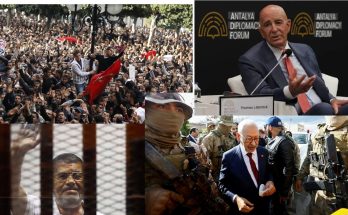
However, once the revolution succeeded as a popular uprising, it was rapidly monopolized by the Shiite Islamist movement. Presenting themselves as the sole and legitimate owners of the revolution, these forces quickly eliminated all revolutionary allies. Leftist organizations, secular intellectuals, trade unionists, and revolutionary youth were brutally suppressed. The revolution was severed from the people’s demands for equality and freedom and transformed into “a project of power established in the name of religion.” Indeed, today Iran’s Prosecutor General, Mohammad Movahedi, openly declares that anyone participating in protests will be considered an “enemy of God,” a charge punishable by death.
The Iranian Revolution did not affect Iran alone. Islamist circles from many countries, particularly Turkey, embraced it as an “anti-imperialist” and Islamic model. Initially, not only Shiites but also Sunni Islamists viewed this revolution as part of their own struggle. Yet the Iranian regime very quickly evolved into a sectarian, highly centralized, and authoritarian system.
The Iran–Iraq War: An Instrument of Internal Legitimacy
The Iran–Iraq War, which began with indirect encouragement from the United States, functioned almost as a lifeline for the Islamic Republic of Iran. The eight-year war provided the regime with a powerful pretext to suppress internal opposition. Discourses of “national defense” and “anti-imperialism” temporarily aligned large segments of society behind the regime.
From this period onward, the Iranian leadership used opposition to the United States and Israel—under the banner of the “axis of resistance”—not merely as a foreign policy stance (which has indeed been supported by significant segments of the region’s peoples), but also as an ideological shield to legitimize internal repression. At the same time, this policy gradually turned into a state strategy serving Iran’s ambition for Shiite-hegemonic regional power, competing with the regional policies of Saudi Arabia and Turkey. As a result, even under conditions in which Iran has been the only Muslim country to engage in direct confrontation with Israel in response to the genocide in Gaza, the sympathy and support it has received from the peoples of the region have been overshadowed by Sunni sectarian forces.
Religious Oligarchy, Corruption, and Economic Collapse
Today, Iran has for many years been governed by a small religious-oligarchic minority. The post-revolutionary discourse of “the rule of the oppressed” has gradually given way to a vast system of corruption, rent-seeking networks, and deepening class divisions. In particular, the economic structure centered around the Revolutionary Guards controls a significant portion of the national economy, while the population increasingly struggles under conditions of severe poverty.
The immediate trigger for the latest wave of protests has been the dramatic devaluation of Iran’s currency and the deepening economic crisis, exacerbated by decades-long sanctions. Particularly striking is the fact that the protests began among the bazaar merchants—once the backbone of the Islamic Revolution. This indicates that the regime’s social legitimacy has eroded even within its own historical base.
Iran has experienced numerous uprisings in the past. Workers, women, students, and ethnic minorities have repeatedly taken to the streets. Each time, these movements were crushed through heavy repression. What we are witnessing today is a new and deeper phase of this accumulated and suppressed anger.
Imperialist Threats and the Hypocrisy of “Democracy” Promises
While the United States and Israel militarily and politically threaten Iran, they simultaneously claim to promise “freedom” and “democracy” to the Iranian people. This rhetoric is all too familiar to the peoples of the Middle East. The cases of Iraq, Libya, Syria, and Afghanistan remain vivid reminders.
The vast majority of Muslim-majority countries in the region share similar fates, albeit in different forms: authoritarian regimes, widespread corruption, political Islam or military tutelage systems, social repression, and ethnic and sectarian discrimination. Under these conditions, societies are drawn into a spiral of growing discontent; uprisings erupt; and these social crises are then transformed into grounds for intervention by external powers pursuing their own imperial interests.
The most dangerous threshold is reached when a segment of the population begins to view foreign intervention against its own country as a form of “liberation.” This is precisely the legitimacy space most desired by imperialism. In Iraq, under conditions of “Sunni minority rule,” parts of the oppressed Shiite population and the Kurdish people initially welcomed U.S. bombardment and occupation. Similarly, in Syria, oppressed Sunni Islamist groups—and even the Turkish government—wished for the United States and Western powers to drop more bombs on Damascus in order to bring about the regime’s collapse. Regrettably, similar tendencies can now be observed with regard to Iran.
Is This the Fate of the Muslim Peoples of Our Region?
Is this truly the fate of the Muslim peoples of our region? The fundamental problem in Iran and across much of the Muslim world is not merely foreign intervention; it is, above all, systems of governance that fail to prioritize equality, freedom, and democratic rights. Neither religious oligarchies, nor military regimes, nor dynastic rule have been able to offer these societies a dignified future. Imperial powers, of course, have not intervened to deliver democracy and rights to the people, but rather to exploit popular demands and reactions against oppressive regimes in pursuit of their own interests.
Iran, together with Turkey, is one of the most important and advanced countries in the region, possessing a deep state tradition and a rich civilizational heritage. Its stance of resistance during the genocide in Gaza has been highly valuable for the peoples of the region; yet it has failed to receive the support it deserves from either anti-imperialist movements worldwide or from Muslim societies. Unless Iran and similar countries can achieve—through their own internal dynamics—a transformation based on secular state structures, social justice, democratic participation, equality of diverse identities, and the rule of law, this “vicious cycle” will persist: repression, uprising, suppression, threats of imperial intervention, and ever greater destruction.
Is There No Way Out?
The understanding of democratic rights and freedoms grounded in the rule of law—today most visible in Western countries—was not granted from above, but won through centuries-long struggles by peoples of all identities against dominant minority powers. These approaches constitute universal human values, drawing both on secular, libertarian social thought and on ethical interpretations of religious traditions. In recent years, however, as the independent social and political power of popular classes has weakened in the face of dominant forces, this understanding has significantly eroded even in Western societies, giving rise to discussions of a “new Middle Ages.”
These shared values of humanity must be re-created through popular struggle—not only at the level of law and politics, but within a broader perspective that also overcomes massive economic inequalities. Our own geography possesses a profound civilizational potential capable of making a serious contribution to the re-establishment of these values at a more advanced level.
The current uprisings in Iran are not merely economic reactions; they are a delayed reminder of a people’s revolution that was left unfinished and ultimately usurped in 1979. This reminder will either evolve into a new path toward freedom and justice, or once again be brutally suppressed—plunging Iran and the entire region into an even darker future, whether through the continuation of the old regime or the establishment of a new puppet regime under imperialist intervention.